A design system is a shared library of components, tokens and rules that lets teams ship faster. The business case, and how Studio Yapa builds them.
A design system is a shared library of components, design tokens and usage rules that your designers and engineers pull from instead of rebuilding the same pieces on every screen. It is the difference between furnishing every room from scratch and having a workshop that already knows your measurements. At Studio Yapa, a product design studio in London, we build design systems for product teams who are tired of paying for the same button five times.
The money case is not abstract. It shows up in three budgets you already track: engineering time, bug fixing and onboarding.
How does a design system save engineering time?
Engineers stop rebuilding solved problems. A mature system means a new screen is assembled from tested parts rather than written from zero, and the saving compounds with every screen after the first.
The savings concentrate in predictable places:
- Fewer decisions per screen. Spacing, states and type come from tokens, so nobody debates a padding value in review.
- Fewer visual bugs. Components are tested once and reused, so the same fix does not ship four times.
- Faster onboarding. New designers and engineers inherit the decisions instead of relearning them.
- Cheaper redesigns. Change a token, and the change lands everywhere at once.
A design system is the only design deliverable that gets cheaper every time you use it.
What does a design system include?
A working system has four layers, and skipping any of them is where most internal attempts stall:
- Tokens. The raw values: colour, type scale, spacing, radii, elevation. Named by function, so they survive a rebrand.
- Components. Buttons, forms, cards, navigation, each with every state designed: hover, focus, error, loading, empty.
- Patterns. How components combine into flows people repeat, like tables with filters or multi step forms.
- Documentation. The rules and the reasons. Rules without reasons get broken the first time they are inconvenient.
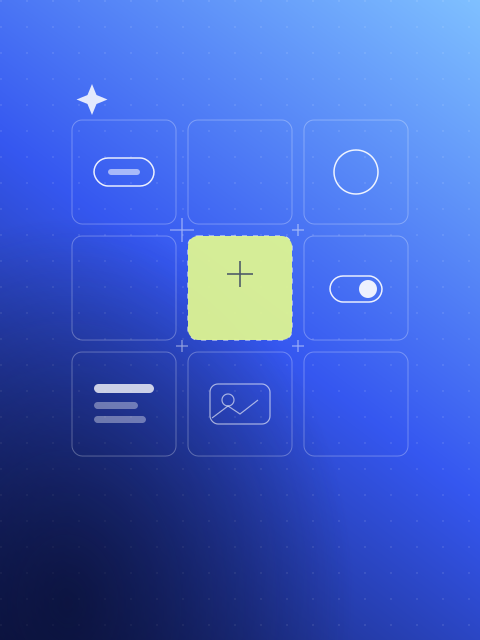 Components snap to the grid so people can think about the product.
When is a design system worth building?
The threshold is two or more people shipping interface, with more screens ahead of you than behind you. Below that, a well organised component file is enough. Above it, the absence of a system is already costing you, whether you measure it or not.
Signs you have crossed the line include screens that look like different products, engineers asking which button is the real one, and every new feature starting with a fresh Figma frame.
How Studio Yapa builds a design system
We design systems with the engineers who will use them, because a system that only lives in Figma is a style guide, not a system. Our designers also write production code, so tokens and components are named, structured and documented the way your codebase needs them.
A typical build runs in four stages:
- Inventory. We audit what already exists across your product and count the variations, so the system is built from your real needs rather than a template.
- Foundations. Tokens first, named by function, so a future rebrand is a change of values rather than a rebuild.
- Components and patterns. The parts your product uses most, with every state designed and tested.
- Handover. Documentation and a working session with your team, so the system is adopted rather than admired.
For Smart Energy GB we built two custom design systems from the atoms up, spanning their domestic and micro business propositions and designed around a templating system that ran three sites deep. Their internal teams now build on those systems, and 224 pages were moved onto the new UI and UX.
Common questions
How long does it take to build one? A focused first release takes six to eight weeks: tokens, the core components covering most of your product, and the documentation to run them.
How much does a design system cost? It depends on the size of your product and how much already exists. We quote each system to its scope, and for teams who want ongoing support we offer retainers with a fixed number of design days each month.
Will it make our product look generic? No. The system handles the floor so craft can go into the ceiling: the flows and moments that deserve invention.
Can you fix our existing half finished system? Yes. Most system work we do is rescue work, and it is usually faster than starting again.
A design system is an investment that pays back on every screen you ship after it. If your team is shipping the same screen twice, book a discovery call with Studio Yapa and we will show you where the savings are.