Design studio pricing in 2026 explained. Real market ranges for sprints, engagements and retainers in London and the US, with a fair way to compare quotes.
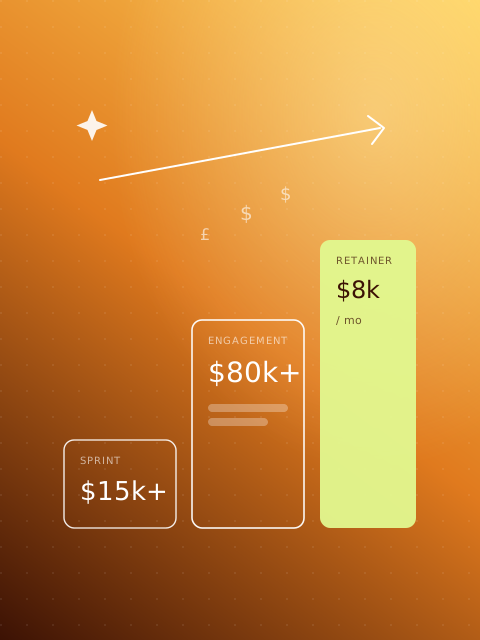
Design studio pricing in 2026 clusters into three bands. Sprints (three to six weeks) run $15,000 to $60,000 in the US and £12,000 to £50,000 in London. Full engagements (two to five months) run $80,000 to $350,000 in the US and £60,000 to £250,000 in London. Ongoing retainers run $8,000 to $40,000 monthly. These are typical market ranges for senior product design and brand studios; boutique studios sit at the lower end, larger agencies push above.
Most studios refuse to publish numbers because they optimise for high anchor quotes. That leaves founders trying to compare three proposals from three different pricing models. This guide unpacks the market so you can walk into a discovery call already knowing the shape of the answer.
What does a design studio actually charge for?
Studio pricing usually covers four things:
- Senior time. The people actually doing the work, at a day rate that reflects a decade of experience.
- Project management. Someone keeping timelines, running reviews, chasing sign offs. Real work, often twenty to thirty percent of the total.
- Overhead. Software, insurance, office, non billable time between projects. Roughly fifteen to twenty percent of any studio’s revenue.
- Risk buffer. Every fixed price quote has one built in, because scope creep is a certainty.
If a studio charges you an hourly rate, you are financing their risk buffer live. If they charge a fixed phase price, they have already priced it in. Neither is wrong; they just look different.
Design sprint pricing in 2026
Sprints are focused, defined engagements running three to six weeks. Typical scope: a rebrand of an existing product, a single feature design, a landing page redesign, an early stage brand sprint, or a discovery to align a founding team.
London: £12,000 to £50,000 United States: $15,000 to $60,000
Small boutique studios sit at the lower end. Established senior studios sit in the middle. Larger agencies with more overhead sit at the top. A sprint under £8,000 in London or $10,000 in New York usually means you are hiring a freelancer under a studio badge.
Full engagement pricing in 2026
Full engagements run two to five months and cover multiple disciplines: research, product design, brand, sometimes development. Typical scope: launching a new product, entering a new market, running a full rebrand, or the design half of a Series A raise.
London: £60,000 to £250,000 United States: $80,000 to $350,000
The wide range reflects real differences in team size and seniority. A two person senior studio and a fifteen person agency will both quote for the same scope; the numbers will differ by a factor of three, and so will the experience.
Cheaper is not always worse, but you are always paying for something. If the quote is low, ask what has been descoped.
Retainer pricing in 2026
Retainers are ongoing monthly engagements, usually with a fixed number of senior days per month. Common shapes: two days a week (roughly eight days a month), or one week a month (roughly four days).
Two days a week retainer: $16,000 to $40,000 monthly in the US, £13,000 to £32,000 in London. One week a month retainer: $8,000 to $22,000 monthly in the US, £6,000 to £18,000 in London.
Retainers are a good fit once you have a shipped product and a predictable rhythm of design work, but not enough to justify a full time hire yet.
London vs US pricing: is there a difference?
Yes, and less than founders expect. Once currency is normalised, top US studios run twenty to thirty percent higher than top London studios of similar seniority. That gap has been closing steadily since 2020, and for remote engagements it barely exists.
If you are a US founder considering a London studio, you get the same senior craft at roughly the same price, with a five to eight hour time zone difference that matters only if your project has daily standups.
Why do quotes vary so much between studios?
Three reasons. Overhead differs (a fifty person agency has to charge more than a five person studio for the same output). Seniority differs (some quotes are for juniors managed by seniors; others are for seniors doing every hour). Assumptions differ (one studio assumes six rounds of review; another assumes two).
The last one is where founders get burned. Two quotes for “a rebrand” can differ by three hundred percent because one quietly assumes twice as many stakeholders and revision rounds.
How to compare quotes fairly
Three moves make quotes comparable:
- Ask what is included in every quote. Line by line: research days, design days, review rounds, delivery formats, meetings, developer handover.
- Ask who is doing the work. By name, and by percentage of hours. A quote from a senior led studio and a quote from an agency where seniors sell and juniors execute are not the same product.
- Ask what the assumptions are. Number of stakeholders, number of feedback rounds, number of decision makers on approval. These drive real cost more than day rates.
Do those three things and quotes stop looking wildly different. They usually resolve into “cheap because juniors are doing it”, “expensive because seniors are doing it and the studio is large”, and “in between because seniors are doing it and the studio is small”.
Common questions
Are cheaper studios always worse? Not always. Small senior led studios in London and in second tier US cities regularly beat larger agencies on both price and quality. The correlation between cost and quality is real, but it flattens once you are talking to senior studios.
Do studios negotiate? Yes, on scope. Rarely on rate. If a studio drops its rate by twenty percent to win the pitch, it will find twenty percent of the scope to quietly cut in delivery. Ask for less scope at a lower price, not the same scope cheaper.
What is the minimum realistic budget for a product design engagement? Around £30,000 in London or $40,000 in the US, delivered in a focused four to six week sprint with a small senior studio. Below that, you are firmly in freelancer territory.
Are day rates a fair way to compare? Only within the same seniority band. Senior designer day rates in 2026 sit at £900 to £1,600 in London and $1,200 to $2,200 in the US. A studio with an average day rate at the top of that range is charging for seniority; one at the bottom is charging for volume.
Ready to see what your specific project would actually cost? Book a discovery call with Studio Yapa. We publish honest ranges before any proposal so you know if we are in your budget before you spend an hour on a call.