AI product design is the practice of designing AI features around user trust. Here is how a London studio approaches agents, copilots and AI interfaces.
AI product design is the practice of designing AI features so people understand them, trust them and return to them. It covers agents, copilots, chat interfaces and every screen where a model makes or suggests a decision. At Studio Yapa, a product design studio in London, it is now part of almost every product engagement we take on.
The reason is simple. Most AI features fail for design reasons, not model reasons. The model is usually good enough. The interface around it rarely is.
Why do users abandon AI features?
Users abandon AI features when they cannot answer three questions: what is this thing doing, how sure is it, and what happens if it gets it wrong. When an interface leaves those questions open, people stop using the feature within a session or two.
The pattern we see in audits is consistent:
- The feature promises magic instead of stating a job. Users cannot tell what to ask for.
- Loading states hide what the model is doing, so waits feel broken rather than busy.
- Output arrives with total confidence, even when the model is guessing.
- There is no visible way to correct, undo or escalate to a human.
People do not need AI to be perfect. They need to know when it is not.
That single principle drives most of the design decisions that follow.
What does good AI product design look like?
Good AI product design makes the model’s behaviour legible. In practice that means a handful of patterns we apply on every AI engagement:
- A stated job. The entry point says what the AI is for, in one sentence, in the user’s words.
- Honest progress. While the model works, the interface says what is happening in plain language.
- Confidence signals. Outputs carry visible cues about certainty, sources or freshness.
- Editable results. Every AI output can be corrected in place. The correction improves the next attempt.
- Guardrails users can see. Limits are stated up front, not discovered through failure.
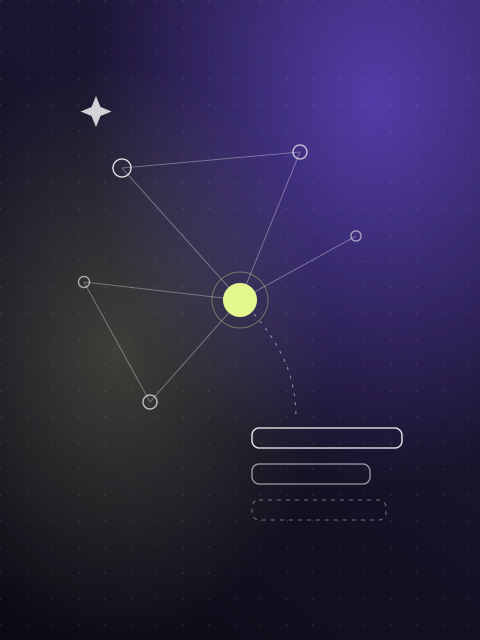 Signals converge into an answer people can check.
How is designing an agent different from designing a copilot?
A copilot suggests and the user decides. An agent decides and the user supervises. That difference changes the entire interface contract.
Copilot design is about the moment of suggestion: where it appears, how easily it can be accepted, edited or dismissed, and how it stays out of the way when unwanted. Agent design is about supervision: a clear activity log, checkpoints where the agent pauses for approval, and a stop control that always works. Products that blur these two models confuse users about who is holding the pen.
Common questions
How long does an AI feature design project take? Typically four to eight weeks from research to tested prototype, depending on how much of the underlying flow already exists.
Do we need our model finished before design starts? No. Designing against the model’s real failure modes early is exactly what prevents expensive rework later.
Can you audit an AI feature we already shipped? Yes. We run structured reviews of AI features against trust, clarity and control heuristics, and return a prioritised fix list.
AI product design is one of the services we offer at Studio Yapa. If you are building an agent or an AI feature and want it to earn trust from the first session, book a discovery call.